Filmora Crack exe Full (x32) [Full]

Poster
🔗 SHA sum:
%DHASH%
Updated: %DDATE%

  • Processor: 1 GHz processor needed
  • RAM: 4 GB to avoid lag
  • Disk space: Free: 64 GB

Filmora is a video editing application with AI-enabled tools that simplify tasks such as automatic clip slicing, scene detection, quality enhancement, and AI portrait removal. Offers multi-camera editing, color correction, and keyframe support. Easy-to-use interface enhanced with AI tools to speed up the editing process. A great choice for influencers, vloggers, and content creators seeking quick video production. Comes with pre-designed templates and AI-powered features for quick editing.

  1. Keygen supporting both permanent and trial licenses
  2. Filmora 13 Portable + Product Key [Full] Patch Bypass
  3. Keygen generator capable of creating complex serial formats
  4. Filmora 2025 Portable + Keygen no Virus [Full]
  5. Keygen application designed for simple and fast serial generation
  6. Filmora 13 Portable + License Key [Latest] (x32x64) [no Virus] Instant
  7. Key activator bypasses hardware locking mechanisms
  8. Filmora Crack + Product Key [Stable] [Full] MediaFire

Filmora Crack tool [Full] x86x64 Windows 11 Tested

Poster
📎 HASH: %DHASH%
Updated: %DDATE%

  • Processor: At least 1 GHz, 2 cores
  • RAM: 4 GB for keygen
  • Disk space: 64 GB for install

Filmora is a video editing application with AI-enabled tools that simplify tasks such as automatic clip slicing, scene detection, quality enhancement, and AI portrait removal. Supports multi-camera editing, precise color adjustments, and keyframing. Has an intuitive interface, supported by AI features that make editing faster. Excellent for YouTubers, influencers, or anyone looking to streamline video production. Provides ready-to-use templates and AI tools to simplify the editing process.

  1. Full key management tool with crack support
  2. Filmora Crack + License Key [Lifetime] Full Premium
  3. Crack patch compatible with both 32-bit and 64-bit architectures
  4. Filmora Wondershare Crack + Portable [Patch] Lifetime
  5. Download crack package including detailed installation guide
  6. Filmora 12 Crack exe [Patch] Patch .zip
  7. Crack compatible with all software editions (home, pro, etc.)
  8. Filmora 14 Crack [no Virus] [no Virus] Unlimited
  9. Crack bundle includes license.txt and patcher.exe
  10. Filmora Crack + License Key [Latest] x32-x64 Stable 2024
  11. Offline crack utility – no internet access required
  12. Filmora 14 Crack only Lifetime (x64) Final 2025

CCleaner Crack exe [no Virus] (x32-x64) Patch Tested

Poster
🛡️ Checksum: %DHASH%

⏰ Updated on: %DDATE%

  • Processor: 1+ GHz for cracks
  • RAM: Minimum 4 GB
  • Disk space: At least 64 GB

CCleaner is a powerful tool for optimizing system performance by cleaning junk files, fixing registry problems, and controlling startup items. CCleaner cleans a variety of files, including cache, temp files, browser history, duplicate files, and system restore points. It includes essential tools like a registry cleaner, an uninstaller, and a space eraser for privacy. Ideal for anyone looking to clean their PC and improve overall system performance. Past malware problems have been resolved, and the latest versions of CCleaner are safe if updated regularly.

  1. Keygen generator with batch serial number creation
  2. CCleaner premium Crack + Portable Full [x86-x64] [100% Worked] MediaFire
  3. Keygen supporting both permanent and trial licenses
  4. CCleaner Crack + Product Key Patch Latest Premium
  5. Keygen tool with updated license algorithm
  6. CCleaner 2024 Portable exe [Final] [x86x64] Latest Unlimited
  7. Keygen supporting OEM and retail license key formats
  8. CCleaner Crack + Product Key Windows 11 x32 [Stable] 2025
  9. Patch download with malware scans and safety checks
  10. CCleaner Crack + Product Key [no Virus] x86-x64 Windows 10 Tested
  11. Universal patch tool for multiple software products
  12. CCleaner Crack Stable x32x64 [no Virus]

Adobe Illustrator 2022 Portable 100% Worked [x32] [Final] Ultimate

Poster
💾 File hash: %DHASH%
Update date: %DDATE%

  • Processor: 1 GHz chip recommended
  • RAM: At least 4 GB
  • Disk space: 64 GB required

Adobe Illustrator is software used for creating scalable vector illustrations and logos. It supplies advanced tools for exact drawing and coloring. It enables multiple artboards, layers, and integration with Adobe Cloud. Used by creatives for print, web, and mobile design. Celebrated for strong vector editing and quality artwork generation.

  • Patch tool removing all activation and trial restrictions
  • Adobe Illustrator Crack + Keygen Windows 10 (x86-x64) [Full] Instant
  • Key generator with built-in license verification bypass
  • Adobe Illustrator 2025 Crack exe [Latest] [x64] Windows 10 Tested
  • Product key retriever tool for lost serial numbers
  • Adobe Illustrator 2025 Crack [Patch] (x64) [Latest] Tested
  • License updater allowing easy transfer of software keys
  • Adobe Illustrator 2023 Portable tool [Patch] (x64) [Clean] 2025

Filmora Crack only Clean Latest 2024

Poster
🔧 Digest:
%DHASH%
🕒 Updated: %DDATE%

  • Processor: 1 GHz CPU for patching
  • RAM: 4 GB for crack use
  • Disk space: Free: 64 GB

Filmora is a video editor with AI-driven features for simplifying common tasks. Enables multi-camera workflows, with color correction tools and keyframe editing. Intuitive user interface with AI features that streamline the video editing workflow. Great for bloggers, content creators, or anyone who wants to produce polished videos quickly. Includes creative templates and AI tools to streamline editing.

  1. Silent patch installation without user prompts
  2. Filmora Crack + Portable [Stable] Windows 10 Genuine
  3. Bypass licensing errors using custom patch
  4. Filmora Crack + Product Key Full Clean Tested
  5. License file generator based on system fingerprint
  6. Filmora Portable Patch [Lifetime] Unlimited

Psychological Benefits of Chanting

Chanting is a form of meditation with similar psychological benefits as that of mindfulness. The practice of chanting constitutes a part of many religious practises in culture across the globe such as African, Native American, Vedic as well as Jewish. Even today, chants have been used in various rituals of cultures and are prevalent in events such as Football (football chant) or school assemblies and more.

In the past two decades, many researchers have studied psychological, neurological as well as mental health benefits of chanting. Some of these benefits are specified below.

Psychological Benefits of Chanting

Cognitive Functions

A research study conducted by a team at the University of Pennsylvania found that Mantra based chanting had effects on patients with memory loss. Brain scans of the participants were conducted before and after eight weeks of practising mantra based chanting. After eight weeks, these participants showed significant increase in the cerebral blood flow in various parts of the brain. These participants also showed improvement on neuropsychological assessments measures such as visuospatial memory and verbal memory.

The Alzheimer’s Prevention Foundation suggests Kriya Kirtan meditation, a form of chanting meditation, on its website as an easy and simple way for the elderly to practice brain stimulation exercises that can reduce the risk of memory related issues.  

Attention

Chanting is a practice of reciting a specific word, phrase, syllable, mantra or hymn, religious or non religious, either vocally or silently. This ritual disables the mind from wandering and lets it focus on a specific stimulus. Just like meditation, similar effects are observed in terms of improvement of focus and attention.

A research study conducted by the Warwick Research Services, UK, has also found benefits of Vedic Chants in children at risk of Attention Deficit Hyperactivity Disorder (ADHD). In this study, children not only showed improvement in ADHD symptoms but also better behaviour towards their peers as reported by their parents. 

Mood 

Another great benefit of chanting is its effect on mood and stress. A study on “Kriya Kirtan” by a team at the University of West Virginia found that participants who engaged in reciting the mantra of Kriya Kirtan for 12 minutes a day for a period of 12 weeks showed improvement in sleep, mood and quality of life. 

A systematic review by Lynch et al. also found similar results. The team of researchers at the Royal College of Physicians of Ireland studied 37 research papers and found a significant effect of mantra chanting on levels of anxiety, stress, psychological distress, depression, burnout and even anger. 

Anger

Chanting and meditation is widely practiced by individuals who face anger issues. Another field of research that has shown tremendous results of chanting for people who wish to learn anger management. 

An Indian research study by Dhanaraj et. al exposed their participants to listening Vedic chants. After assessing their anger and anxiety levels, pre and post test scores on  State-Trait Anxiety Inventory (STAI) as well as State-Trait Anger Expression Inventory-2 (STAXI-2) did show a significant reduction. 

The importance of meditation has been recognised by people across the globe. Mental health professionals strongly advise their clients and patients to practise mediation according to the style or form that suits them the most. Chanting is one of the many forms of meditation and practising it can guarantee psychological benefits such as cognitive functions, attention, mood and anger that further more assist good mental health. 

How to Practice Chanting based Meditation?

Happy Chant App

The Happy Chant App

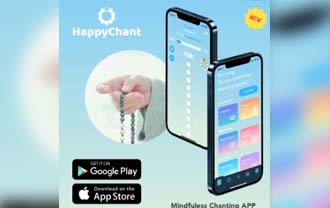
Happy Chant is a revolutionary App designed to help people improve their lives through pleasant mindfulness techniques, such as meditation and chanting of mantras.

The Happy Chant App helps its users cope with stress, anxiety, a lack of concentration and much more. It doesn’t matter if you’re just a beginner or full-fledged mindfulness expert, the system is based on merits and progression: HappyChant App wants to encourage everyone to be constant, so that they will be able to enjoy more and more mental and physical benefits. 

The mobile app is available on both Apple and Android Stores. Find out more about the HappyChant App here.

Maitri Mangal Chanting Wheel

Maitri Mangal Chanting Wheel

The Mangal Maitri Chant Wheel consists of a beautiful stick with a rotating top, both made from naturally seasoned teak wood. The top has the Mangal Maitri Chant, a deep healing and wellness prayer engraved on the outer surface; as well as written on a paper, rolled and inserted on the inside surface to double the impact of the striking words that make up the prayer.

Rotate the Mangal Maitri Chant Wheel and chant the prayer or repeat the line, Aloud or in thoughts, ‘Mera Mangal, Tera Mangal, Sabka Mangal Hoy Re’ or ‘May I be happy, May you be happy, May all beings be happy’. By doing so, you are sending out positive, happy and healing vibrations to yourself and to the universe. Do this frequently, every day and at any time with mindfulness in a way to solidify peace, prosperity, happiness and wellness within and around you.

One could also use chants such as “Aum” or Vedic Chants or hymns from the Bible or other chants of choice to practise the same ritual and observe the same results of mindfulness through rotating the Maitri Mangal Chanting Wheel. Know more about the Maitri Mangal Chant Wheel here.

 References:

 Perry, Gemma & Polito, Vince & Thompson, William. (2016). Chanting Meditation Improves Mood and Social Cohesion. Proceedings of the 14th International Conference on Music Perception and Cognition

Dhanaraj1, K., & Srinivasan, V. B. (2019). State Anxiety and Anger levels among listeners of Vedic Mantra Chanting. The International Journal of Indian Psychology, 7(1). doi:10.25215/0701.099

Julie Lynch, Lucia Prihodova, Pádraic J. Dunne, Áine Carroll, Cathal Walsh, Geraldine McMahon, BarryWhite. 2018. Mantra meditation for mental health in the general population: A systematic review.European Journal of Integrative Medicine, Volume 23, October 2018, Pages 101-108. https://doi.org/10.1016/j.eujim.2018.09.010

Innes, Kim E.; Selfe, Terry Kit; Brundage, Kathleen; Montgomery, Caitlin; Wen, Sijin; Kandati, Sahiti; Bowles, Hannah; Khalsa, Dharma Singh; & Huysmans, Zenzi. 2018. Effects of Meditation and Music-Listening on Blood Biomarkers of Cellular Aging and Alzheimer’s Disease in Adults with Subjective Cognitive Decline: An Exploratory Randomized Clinical Trial. Published November 2018 DOI: 10.3233/JAD-180164. https://www.ncbi.nlm.nih.gov/pubmed/30320574

Aleezé Sattar Moss; Nancy Wintering; Hannah Roggenkamp; Dharma Singh Khalsa; Mark R. Waldman; Daniel Monti; & Andrew B. Newberg. Effects of an 8-Week Meditation Program on Mood and Anxiety in Patients with Memory Loss. The Journal of Alternative and Complementary Medicine VOL. 18, NO. 1. Published Online: 23 Jan 2012. https://doi.org/10.1089/acm.2011.0051

Ricardo Ramírez-Barrantes, Marcelo Arancibia,Jana Stojanova,Mauricio Aspé-Sánchez,Claudio Córdova, and Rodrigo A. Henríquez-Ch. (2019).Default Mode Network, Meditation, and Age-Associated Brain Changes: What Can We Learn from the Impact of Mental Training on Well-Being as a Psychotherapeutic Approach?Neural Plasticity. Volume 2019, Article ID 7067592. https://doi.org/10.1155/2019/70675924.  

https://www.iomcworld.org/proceedings/effects-of-vedic-mantra-chanting-on-attentiondeficit-hyperactivity-disorder-symptoms-in-young-children-results-from-quasiexperimen-50346.html

 Picture Credits:

 Bhakti Marga

OM Chanting | Bhakti Marga

View More Posts

Share on facebook

Share on google

Share on twitter

Share on linkedin


Positive thinking is the new thing in trend these days.

The phrase ‘Home Sweet Home’ has been used widely and it has a simple meaning that our home must be a place where we feel comfortable, relaxed and at peace. Considering that most people spend the majority of their time at home, creating a positive environment is very important since it tends to affect our mood, productivity and wellbeing. Being at home or coming home after a busy day should be a relaxing experience, a place where you can focus on being more mindful and reflect on your day.

To assist your journey of creating a mindful and wellness-oriented environment at home, there are many products available at the MHT Store that can truly help embed these positive factors. Along with your home environment, these products can also be placed at your work station, offices, etc. Some products that you can begin your “wellness at home” experience with are-

Awareness Calendar – Profound Experience Of Living

Awareness Calendar -Profound Experience Of Living

This calendar can help in inculcating mindfulness and increase one’s awareness. It is made of naturally seasoned teak wood and has 8 mindful activities that are on adjustable wooden panels along with the date-month slabs. It is a beautiful piece with mindfulness elements as well which makes it a perfect fit to improve the wellness aspect through physical elements at home. The Awareness Calendar can be added to your work desk or dining table or even in your bedroom as a sweet reminder for mindful activities for self and family.

Chalkboard-Space To Express

Chalkboard-Space To Express

Chalkboard is a great way to express yourself creatively and is a channel to keep communication alive amongst family members. It can be used by family members or colleagues at work to positively express themselves. It aims at channelling thoughts, emotions and feelings in a more optimistic direction. It also communicates one person’s positive thoughts to other people and impacts other people by helping them feel better as well. This elegant chalkboard made out of reclaimed teak that has hand-painted cherry buds on the wood comes with a chalk-holder and a set of colourful chalk.

Add this piece of mindfulness to your child’s room or the common space in your home where family members can share their positive thought of the day with rest of their family. It can also be added and used at your work station as place for self-affirmative reminders.

The Chalkboard is made of reclaimed teak, it comes complete with a chalk holder and a set of colourful chalks. The board can be placed or hung at a convenient place where all members of the family or colleagues at work can express themselves freely.

Buy now.

Cushion Covers – Set of 5

Cushion Covers – Set of 5

These beautiful cushion covers are precisely handwoven and have positive and affirmative words on them. They are intended to bring a sense of tranquillity and harmony when they are around you and to see such optimistic words around you on these covers will truly boost your positivity throughout the day. As you see the affirming words, they shall remind you to practice them consciously!

Buy now.

Aabhar Patra

Aabhar Patra

The word “Aabhar” means gratitude and “Patra” means vessel. The Aabhar Paatra aims at helping individuals practise the skill of paying gratitude that has shown research-based in improving emotional, psychological as well as mental health. Giving thanks is the shortest way of feeling happier.

Chiselled out of naturally seasoned teak, Aabhar Patra has beautiful, laser-cut leaf designs on each of its sides. It comes with a jute bag containing multi-coloured handmade flowers. For each time you pay gratitude, take a flower in your palm and feel genuinely thankful. Gently place the flower in the Aabhar Patra, with utmost love and gratitude.

All family members can take out some time daily to feel and express gratitude. Besides finding newer reasons to be thankful, you can express your gratitude for the same things over and over again; such as being thankful for your sumptuous meals.

Buy now.

The Now Cube – 6 Dimensions of Awareness

The Now Cube – 6 Dimensions of Awareness

“Now” is the only time in our control. The Now Cube aims at bringing us back to the present moment. Being in “Now” is necessary as it brings in a sense of calmness, rexalation, enjoyment and fulfilment.

The Now Cube is a wooden dice made from Naturally Seasoned Teak Wood, with 6 simple and highly effective activities along with each number. These simple mindfulness-based activities develop skills for conscious living, self-awareness and positive thinking.

Locate the Now Cube at your bedside table or work desk. Every time you wish to take a small break, grab the cube, roll it and instantly do as it says – mindfully. With each number comes a unique activity that will help us focus on being in “Now”.

Buy now.

Home décor and other physical objects kept within our homes tend to play a major role in increasing our positivity and maintaining our mental health as it can be calming, soothing or simply just make you smile and feel happier. Surrounding your home with things that inspire you and make you more optimistic is a great way to make your home a great place to be in. Though physical elements are not the only factor for a positive mindset , having these elements can help remind you to have a better outlook towards situations and this can make you feel better which in turn leads to a state of wellness.

 Picture Credits:

Dream Journal; What, Why, and How.

Dream Journal or dream journal is a therapeutic technique that has recently gained popularity. For most of us, our dreams do not make any sense. They are absurd,confusing, full of unrealistic situations, strange colours and most of the time, easily forgettable. 

What if there is a way to actually make sense of these dreams and also, in some cases, the underlying thoughts and patterns that might be relevant? Over the recent years, many psychologists have researched dreams, dream journaling, and also how keeping dream journals can be an insight into a person’s individuality. No two people can have the exact same dream and possibly make the same deductions out of the event!

For example, Carl Jung “observed that dreams are driven by a natural tendency to bring resolution and closure to unfinished emotional and mental problems of the day.” (Siamak Khodarahimi, 2009).

Picture Credits – Gateway to Lucid Dreaming

What is Dream Journaling?

Briefly, Dream Journaling is the act of recording your dreams. Most nights, an individual dreams for roughly 2 hours during sleep. Upon waking up, there is a small window of semi-awakeness where the dreams are at the tip of consciousness and upon completly waking up, most fade away.

The act of recording the dream (whatever you can remember) in this small window, either in a notebook, voice notes, and/or video diary, is commonly refered to as dream journaling.

Sometimes, we do have recollection of certain dreams or specific instances in a dream that remain in our consciousness. One can always start with noting those down and then start journaling all that they remember from the most recent dreams. Over the course of time, you will start seeing regualr patterns in your writings and also will be able to make deductions of what you are dreaming.

What help making these deductions? Visit the MHT Directory and choose a therapist who can help you.

Picture credits – Lucid Dreaming-Lucid Living

Why should we Dream Journal?

“Dreaming is the art of the mind. Every dream is intrinsically a creative experience. As the artists of the night, we are co-participants in weaving new creations from the complexity of our entire being.” Fariba Bogzaran and Daniel Deslauriers, Integral Dreaming: A Holistic Approach to Dreams (2012).

There are many advantages of keeping a dream journal. Here are some of them.

1. Help have lucid dreams.

What if you could actually control your dreams instead of just experiencing them? When writing or noting your dreams, you are working with both, your subconscious and conscious minds which, when working in correlation, can help you eventually be aware of when you are dreaming and when you’re not. Imagine knowing, in your dream, that you are in fact, dreaming. With a lot of work and practice, one can actually control what one dreams and what course of actions the dreams take. Imagine, no more nightmares!

2. Help create awareness about dream patterns.

When done for extendedn periods of time, dream journaling can help identify patters, reoccuring instances, familar faces, situations, insecurities, fears and even attractions that frequent one’s subconscious minds. When done right, with the right guidance, an individual can make groundbreaking deductions about one’s own psyche with the help of dream analysis.

3. Help reduce stress.

Dream journaling, like any other form of journaling, has extreme benefits for one’s physical, emotional as well as psychological health. Over the recent years, various studies have shown that everyday journaling can help reduce stress, strengthen our immune system, help fight anxiety, help stop overthinking and also slow aging. All of this plus making patterns in your dreams sounds like a fun adventure.

4. Help develop an understanding on your emotions.

It is common knowledge that emotions and thoughts go hand in hand. Dreams have a huge impact on what you think and how you feel for the whole day. One will be happily cheerful after a nice dream whereas sad, anxious and irritated after a nightmare. Chronologizing your dreams can help you make relations between your dreams and the mood on subsequent days.

5. Dream interpretation is fun!

Just being aware of your dreams, the happenings, frequent faces, various situations can really be an insightful event for most of us. Who wouldn’t want to know what our subsconscious mind is trying to fabricate!

Picture credits – Lucid Dream Society

How to Dream Journal?

Now that we know the what and the why, we have to know the how! Here are some tips that can help you get started.

  1. Pick a comfortable notebook with an attached pen right by your bed

You can make video or voice journals, however, by the time you would have picked your device and opened the app, half of the dream would have been forgotten. Always first write down everything that you remember from your dream on paper and later you can transcribe it into different modes.

  1. Draw images

Our dreams are primarily visual in nature, why should our dream journal be only written text? Making rough sketches initially and then filling them up with colours and shadings as in your dream can help you recollect the scene better and also make the process fun.

  1. Try to focus on emotions

Instead of just writing what happened, try to consciously figure out the emotions you felt and how it’s making you feel in the present. Remember the link between feelings, emotions and thoughts!

  1. Write actual names

Instead of just writing that you were out with friends, try writing where you were and with whom. Writing names will give you perspective and also help you eventually in coming up with patterns and deductions.

  1. Follow a template

Following a template will help you structure your dream journal. You can always buy a dream journal, get a free template from the internet or just make your own. Key things to include – Date, time in the dream, setting, characters, emotions, any dialogues, emotions felt during the dream, emotion upon waking up, type of sleep.. so on and so forth. Always try to end the day’s dream by sketching out the visuals.

  1. Download Mind Alcove App

The advancement in technology can be put to use for our mental wellbeing as well. Now you can journal your dreams using the mobile app – Mind Alcove.

Mind Alcove – Download the App Here

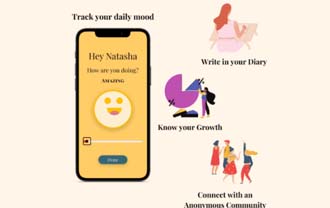
The Mind Alcove consists of four journaling styles: learning, one line diary, gratitude and dream. The feature of dream journaling by Mind Alcove App helps you pen down your dreams in systematic manner by describing your dream, acknowledging emotions attached to that dream and your interpretation of it. This constructive style of dream journaling helps individuals understand their thoughts and emotions present at a subconscious level and thereby resolving it accordingly.

This World’s Sleep day, let’s inculcate the habit of dream journaling and take a step towards understanding our subconscious!

MHT Store offers a wide collection of products that can help you improve the quality of your sleep. Click here to explore now.

References

  1. Why Keep a Dream Journal by Erik Sangerma
  2. How to start (and keep) a dream journal
  3. How To Keep a Dream Journal: Tips, Examples and Templates

Picture Credits

Storyberries

How to stay Mindful & practice Positive Thinking at Home?

devikaa23brijesh

A Guide for Coping with Insomnia

Insomnia is not just a lack of sleep at night. It is a mental disorder that can make the process of sleep as well as the hours of waking up extremely difficult for an individual. It can be short-term insomnia (acute) or long-term insomnia (chronic).

Insomnia symptoms may include:

  • Trouble falling asleep at night
  • Frequent waking up during the night
  • Waking up too early in the morning
  • Not feeling well-rested after a night’s sleep
  • Daytime tiredness or sleepiness
  • Irritability, depression, or anxiety-like symptoms
  • Difficulty paying attention, focusing on tasks, or remembering simple tasks
  • Increased errors or accidents throughout the day
  • Ongoing worries about sleep

It is advised to visit a sleep doctor as soon as possible to get an accurate diagnosis as well as a treatment plan that might or might not include medication.

However, research has shown that meditation and regular chanting of mantras can lead to a peaceful sleep. In order to help with this, the Happy Chant App is a well-known resource that has proven to be accurate and research-backed in this realm. Happy Chant is a revolutionary app designed to help people improve their lives through pleasant mindfulness techniques, such as meditation and chanting of mantras.

Click here to download the Happy Chant App now.

A step-by-step meditation guide for coping with Insomnia

The following is a step-by-step guide is made by an accredited meditation teacher from the Happy Chant App suggesting a 10 minutes slot to perform before heading to bed. If performed regularly, it can help achieve a sound sleep.

  1. Be Cosy and Comfortable

When we start a pre-sleep meditation session, the very first thing to take care of ourselves. Be sure you feel comfortable, wear something you feel cozy in, organize your pillows or the setting in order to sit or lay. Adjust the temperature and stop for 30 seconds to check in with yourself: do you feel comfortable? If the answer is yes, you can go on to the next step.

  1. Reset the space and your environment

The second step on your path to a calm sleep is about clearing the space from distractions. Be sure that all distractions are out of reach, including your phone, the television, or any source of noise. Just reset your space making it cozy, calm, and safe.

  1. Sit and Breathe

Focus your mind on inhaling and exhaling, tune into the rhythm of it. Feel the natural flow of breath and notice your body movements: you should feel a sensation of full connection with yourself, from your tiptoes to your heartbeat. Inhale for 3 seconds, hold one moment and exhale for another 3 seconds. Repeat this process 5 times. 

  1. Meditate a Mantra 108 times

Choose a piece of relaxing background music and a Mantra. Now repeat it 108 times – you can use the digital mala of Happy Chant to make the count easier. If you decide to use HappyChant App, don’t forget to choose the background music (relax is the one we suggest) and to set the speed of the guiding voice as slow or normal. Don’t rush too much: as you’re heading to bed, slow yourself down. It’s the end of the day and you deserve this 10 minutes to reconnect to yourself. 

While you’re repeating the mantra, try to feel the vibrations you’re producing by pronouncing the words: they’re extremely healthy for your mind and your body, as they help produce some brain waves which turn the “sleep mode” on. 

  1. Thank Yourself and Your Body

You’re about to finish your meditation session: take yourself gently back to reality and after a couple of deep breaths, take a moment to check how you feel. Notice if you feel relaxed and relieved, thank yourself for gifting your mind and body with this quality time meditation. You’ve been compassionate and kind to yourself.

The Happy Chant App

Want to know more about the Happy Chant App? Click here to head to their website. You can also download it here. The Happy Chant App is available both on Play Store & App Store.

Talking to an expert can help you deal with the stressors in your life and also help you with some relaxation techniques. Click here to visit the MHT Directory where you can find the expert you are comfortable with!

References

  1. WebMD
  2. Mayo Clinic

Picture Credits

Spring Air

Get Good Quality Sleep with Yoga Nidra

Yoga Nidra is a form of guided meditation that is also popular by other names such as “ Yogic Sleep” or “Effortless Relaxation”. Yoga nidra is derived from two Sanskrit words which means union or one pointed awareness (Yoga or Yuj) and sleep (Nidra). According to the ancient Indian scriptures, it has been practised widely by sages and their disciples. 

India is the second most sleep deprived country in the world after Japan. Therefore, MHT decides to propagate the practise originated in India’s  hinterland to improve the sleep quality and behaviours of Indians and others facing sleep related issues or disorders.

What is Yoga Nidra?

As mentioned earlier, the practise of Yoga Nidra draws one’s attention inwards through which an individual learns to surf between the two different states: state of wakefulness and state of sleep, directing the body to find its natural state of equilibrium (homeostasis). Changes can be observed in the breathing pattern as the breath balances and becomes quiet. 

Research studies have also shown positive evidence of Yoga Nidra in patients experiencing insomnia. The study by Datta et al; 2017, observed significant improvement in sleep onset latency as well as wake after sleep onset in individuals diagnosed with insomnia. Research evidence obtained by Markil et al; 2012, has found Yoga Nidra also associated with a shift towards parasympathetic dominance. 

Benefits of Yoga Nidra

  1. Sleep related problems are prevalent across all age groups. One of the benefits of Yoga Nidra is that it can be practised by anyone, from children to seniors. Moreover, it can be practised by lying down or by simply being seated. 
  2. One can practise Yoga Nidra for as less as 5 minutes to upto 1 hour. You can choose the length as per your comfort. You can simply plug in your earphones to a guided meditation by Eka Meditation App while in your bed and simply drift off to sleep. This makes it really easy to incorporate this practise in our daily life.
  3. Yoga Nidra is also practised to reduce stress as it promotes deep relaxation through breath awareness. This, in turn, calms the nervous system, helping it relax and reduce stress
  4. While practising guided meditation, one gets the opportunity to know more intimately about themselves and their feelings. Yoga Nidra helps individuals explore the intimate needs and emotions in that moment as well as work on releasing the long-held emotions.

How to Practice Yoga Nidra?

Practising Yoga Nidra has never been easier. The Eka Meditation App has an inbuilt feature of a guided meditation focusing on sleep. Start the guided meditation provided in the Eka Mediation App when you are ready to go to bed.

Eka Mediation : Download the App Now

The first step involves lying down on your back. Rest your arms by your side with your palm facing downwards and close your eyes. 

The next step is to follow the voice of the guided meditation by the expert in Yoga from Eka Mediation. This will help you guide your consciousness through your body.

The third step is to bring conscious awareness to your physical body. You can do this by focusing your concentration on the right side of your body first starting from your thumb, hands, legs and then feet. Do the same for the left side of your body. 

Last, feel  your body weight acting upon the surface. Now awaken the feeling of lightness for each part of your body. 

You can observe significant changes in your quality of sleep within a few days of practising Yoga Nidra. It is a habit that one can inculcate in their day to day life. Apart from its benefits in improving sleep, Yoga Nidra can also be used for distressing your mind before sleeping and acknowledging more intimate thoughts of your consciousness.

 References:

Datta, K., Tripathi, M. & Mallick, H.N. Yoga Nidra: An innovative approach for management of chronic insomnia- A case report. Sleep Science Practice 1, 7 (2017). https://doi.org/10.1186/s41606-017-0009-4

https://www.ekhartyoga.com/articles/practice/what-is-yoga-nidra

https://ekameditation.com/2020/05/27/yoga-nidra-benefits-against-coronavirus/

https://yogainternational.com/article/view/5-benefits-of-yoga-nidra

https://beyogi.com/yoga-nidra-practice-psychic-sleep/

https://www.businesstoday.in/technology/top-story/indians-least-active-second-most-sleep-deprived-fitbit/story/387461.html

Markil N, Whitehurst M, Jacobs PL, Zoeller RF. Yoga Nidra relaxation increases heart rate variability and is unaffected by a prior bout of Hatha yoga. J Altern Complement Med N Y N. 2012;18:953–8. 

Picture Credits:

Openfit

Is Happiness Overrated?


Is happiness overrated? Maybe.. maybe not! But is constantly chasing happiness having an oppositive effect on your mental health, absolutely! This World Happiness Day, we at MHT India thought to explore the most common emotion, happiness, and look at the same with a critical eye.

Picture Credits – Northwest Asian Weekly

First, what exactly is Happiness?

Research in the field of positive psychology often defines a happy person as someone who experiences frequent positive emotions, such as joy, interest, and pride, and infrequent (though not absent) negative emotions, such as sadness, anxiety, and anger (Lyubomirsky et al., 2005). If we were to go by this outlook, a happy individual would be somebody who is joyful, cheerful, and smiling the majority of the time.

Happiness is an emotional state characterized by feelings of joy, satisfaction, contentment, and fulfillment. (Kendra Cherry., 2020). When people usually talk about happiness or being happy, they usually are referring to a set of emotions that they felt at a particular moment.

However, in today’s fast paced life, happiness is slowly turning into a goal. It is no more an experience.

Is happiness overrated?

Happiness or achieving happiness is slowly becoming a booming business for many individuals and even organizations. How many times have you come across advertisements like “Find out the secret to Happiness” or “101 ways to be happy”. Every third individual is turning into a happiness guru who is preaching multiple ways to achieve this omnipresent emotion.

However, in this marathon towards being happy, many people are actually facing the opposite effect. The constant struggle to be happy all the time is making people anxious instead. The social requirement of smiling 24*7 is causing stress and in some cases, even depression. Some of the newest evidence suggests that people who focus on living with a sense of purpose as they age are more likely to remain cognitively intact, have better mental health, and even live longer than people who focus on achieving feelings of happiness. In fact, in some cases, too much focus on feeling happy can actually lead to feeling less happy (Wang, 2011).

What can we do?

  1. Identify what does the word ‘happiness’ or ‘being happy’ means to you.
    Is happiness getting a promotion at work or is it a major life event like getting married? Or is it small things like cooking daily or maybe working out? In the hustle-bustle of the 21st century, most of us have forgotten what happiness is. Identifying and writing down things, instances, people, actions, food items, experiences that make you feel happy can be the first step towards achieving a healthy sense of fulfillment and joy.
    Wish to start journaling about what makes you happy? Click here to explore the various journals available at the MHT Store.
  2. Accept that happiness is a fleeting state, not a constant.
    Happiness is not a medal that can be won or a prize that can be hung on the wall. Like any other emotion that we experience, happiness will also come and go. Trying to be happy all the time will just add to the stress you might experience in hoping to achieve that goal. In turn, you would also feel upset for not being able to be happy all the time! We have to accept that happiness is an emotion that can be experienced like many other emotions across our lifespan. A study by Anderson et al., (2011) concluded that valuing happiness could be self-defeating because the more people value happiness, the more likely they will feel disappointed.
    The moment we start looking at happiness as a state to be experienced and not a goal to be achieved, happiness overrated might not be a problem anymore!
  3. Set realistic goals.
    Most of the time, it is our own unreasonably high expectations that make us feel anxious, stressed and simply, not happy. Setting realistic goals for all things; from everyday chores to life goals, can help one experience actual happiness and also reduce the burden of high self-expectations.
  4. Build a support system around you.
    Having a support system that genuinely values you can go a long way in not making happiness overrated but actually experiencing it just like any other emotion. Supportive friends, family, colleagues, pets, etc can actually help you feel happy. A study by Gulacti., (2010) found that perceptions of social support were responsible for 43% of a person’s level of happiness.
  5. Talk to a professional.
    Wondering how to do all of the above? Talking to a professional can actually help! A therapist is trained to help you make realistic goals, look at the emotions objectively, and also help you come up with a plan of action to meet those goals.

Want help understand this emotion better and talk to a therapist? Visit the MHT Directory to find a therapist in your area who can help you with the same.

So, is happiness overrated or plainly misunderstood? I’ll let you be the judge of that!

References

  1. Psychology Today
  2. VeryWell Mind
  3. Wall Street Journal
  4. Talkspace
Add to cart